There's nothing that cannot be found through some search engine or on the Internet somewhere.
How often I found where I should be going only by setting out for somewhere else.
When I got religion, I found some work to do to benefit somebody.
I've found in the past that the more closely I identify with the heroine, the less completely she emerges as a person. So from the first novel I've been learning techniques to distance myself from the characters so that they are not me and I don't try to protect them in ways that aren't good for the story.
Even when Facebook came out, and I was in college, I found myself never putting anything on it.
I made a very slatternly mother, notably unkeen on housework, unaware that homes need to be cleaned now and then, and too often to be found with a cigarette in one hand and a drink in the other.
I went to a psychoanalyst. He explained things about my love life that I found very impressive... almost scary.
I have considered the subject of missions nearly a year and have found my mind gradually tending to a deep conviction that it is my duty personally to engage in this service.
I had cars, houses, jewels, furs, and a husband who loved me, and a career I was happy with. But I found fulfillment in my relationship with Christ.
When I first started in Malaysia, having a Muslim Malay girl singing and holding a guitar was new to everyone. Even Muslims there had issues with it; they found it weird.
My parents found good paying jobs, educated me and my brother in wonderful public schools, and entered the middle class.
I didn't want to be an accountant; I found myself being a banker, which was a bit different. I went to university, and I was going to do a Ph.D. in the States, but I didn't get the funding for it, so I had two years where I had a bit of a wobble and didn't really know what I wanted to do, and I ended up working as a banker.
To me, the real 'state of the union' is found in how Americans react to current events.
Really, Mexico City has always been this big, complex monster of a city that has always had real problems and needs, and I've always found my way through it in different ways.
There is one simple Divinity found in all things, one fecund Nature, preserving mother of the universe insofar as she diversely communicates herself, casts her light into diverse subjects, and assumes various names.
Entropy theory is indeed a first attempt to deal with global form; but it has not been dealing with structure. All it says is that a large sum of elements may have properties not found in a smaller sample of them.
I do not concern myself much with reading long commentary volumes designed to enlarge at length upon that which is found in the scriptures. Rather, I prefer to dwell with the source, tasting of the unadulterated waters of the fountain of truth - the word of God as he gave it and as it has been recorded in the books we accept as scripture.
'Divergent' was my utopian world. I mean, that wasn't the plan. I never even set out to write dystopian fiction, that's just what I had when I was finished. At the beginning, I was just writing about a place I found interesting and a character with a compelling story, and as I began to build the world, I realized that it was my utopia.
I met a guy on the golf course who was a kinesiologist - after I looked up the word, I found out it meant exercise. I started working with him, and that was many years ago.
I needed something to challenge myself a little more. I found fighting, and it completely fit my personality.
I've found that many of the greatest ideas surface in bars because that's where many people cultivate inspiration.
I've been devoting quite a bit of my time to harmonic studies on my own, in libraries and places like that. I've found you've got to look back at the old things and see them in a new light.
I went into academia thinking that there'd be constant reciprocity between my scholarship and my creative work but found that doing one always turned my mind into the sort of tool that was badly suited to doing the other.
We found out that, contrary to what many people thought, in the immune system, genes can change during the life cycle of the individual.
I found the most difficult thing when you became successful - when I had the record album, it won Album of the Year - that you were cut off from the source of your material. Your material was everyday people, and you were kind of cut off from that, and you had to work at it.
My parents came from Calcutta. They arrived in Cambridge, much like the parents in my novel. And I found myself sort of caught between the world of my parents and the world they had left behind and still clung to, and also the world that surrounded me at school and everywhere else, as soon as I set foot out the door.
Philosophically, I am very different from normal politicians, and normal consultants found that very hard to deal with.
Emotional grandeur, rendered in the vernacular, has been Mona Simpson's forte. In her novels, 'Anywhere but Here,' 'The Lost Father' and 'A Regular Guy,' Simpson wrote wide and long and high about the most profound human bonds: parents and children lost each other, found each other, lost each other again, but differently.
One of the things that I do that I've found from being newly married is that my husband and I, we go in the bathroom and brush our teeth together. And that's when we talk about what's going on in the day, so we get to bond that way.
I looked at the circus, and I looked at the carnival, at the fun fair. But I looked at sleeping accommodations and decided I was too middle class to put up with that! So then I joined the theater and found I could choose my own bedroom. I loved the atmosphere. I loved that we worked till midnight and didn't start till ten.
Chaga is one of the weirdest mushrooms you may ever see. A fungal parasite found on birch trees, Chaga is a hardened, blackened, crusty formation that looks like a bursting tumor.
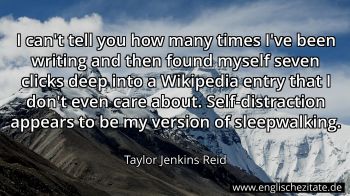
I can't tell you how many times I've been writing and then found myself seven clicks deep into a Wikipedia entry that I don't even care about. Self-distraction appears to be my version of sleepwalking.
My dad passed when I was 6. I found out when I was about 21 that my dad always said acting would be the making of me. Where he got that from, I have no idea.
I found this out over the years, that racism is a thinly veiled disguise over economics and money. It really is.
I had to figure out how to survive in New York, and most of my time was occupied in getting an apartment and getting money. A lot of older jazz guys looked out for me and found me gigs and places to stay.
As the Republican Party has moved farther and farther to the right, I have found myself increasingly at odds with the Republican philosophy and more in line with the philosophy of the Democratic Party.