Anyone who has read a Trollope novel knows that women did not have to wait until 1960 to feel trapped.
When you're working on a novel, you never think about how much it would cost to shoot one of your scenes. But that's a huge consideration in film and TV.
Every novel generates its own climate, when you get going.
It is a big temptation to me, when I create a character for a novel, to say that he is what he is because of faulty wiring, or because of microscopic amounts of chemicals which he ate or failed to eat on that particular day.
I believed, after writing 'Mrs. Kimble,' that I knew how to write a novel. I quickly discovered that I only knew how to write that novel. 'Baker Towers' was a different beast entirely; and I felt as though I had to learn to write all over again.
If it takes you seven years to write each novel, you need a patron. And I would rather have my corporate self as my patron than any arts council or bestower of grants.
I wrote a novel about an economic/environmental collapse titled 'Soft Apocalypse,' and that's definitely the sort I'm best prepared for. To write the novel, I did a lot of reading on what we might expect, so at the first sign, I'm ready to convert all of my assets to gold and ammo and stock up on freeze-dried food.
The experience of writing 'The Kite Runner' is one I will always think back on with fondness. There is an energy, a romance in writing the first novel that can never be duplicated again.
Adapting a novel is not really about being faithful to every word and every moment the author has created. It's more about that same story being filtered through somebody else's sensibility.
I really liked the idea of creating a journal myself. It's like the way I clear my throat. I write a page every day, maybe 500 words. It could be about something I'm specifically worried about in the new novel; it could be a question I want answered; it could be something that's going on in my personal life. I just use it as an exercise.
In the second grade, I would just get bored and a joke would pop into my head and I would have to say it. It was almost like I had some brilliant novel in my head that I had to get down, and I would interrupt class all the time and get in trouble.
There's nothing worse than sitting down to write a novel and saying, 'Well, okay, I'm going to do something of high artistic worth.'
My first novel - the novel I wrote before 'Midnight's Children' - feels, to me, now, very - I mean, I get embarrassed when I see people reading it. You know, there are some people who, bizarrely, like it. Which I'm, you know, I'm happy for.
A novel can grant humanity even to those who act inhumanely, and by making men and women of monsters, it can offer not only a ground-level view of a particular conflict, but a descent into the substratum of human nature capable of the incomprehensible.
In all seriousness, people think that it's the ideas that are important. Well, everyone has ideas, all the time. I tend to write mine down and remember them, but at some point you have to apply the bum to the seat and knock out about sixty five thousand words - that's how long a novel is.
If your agent or publisher is jumping up and down at the thought of your novel, it's because they're picturing the movie poster on the side of the bus.
My new novel 'Red Hook Road' began many years ago as a short article in the newspaper.
One of the biggest mistakes people make is to think that what you need to write a novel is imagination, creativity and a facility with words. Yes, you need all those things, but a novel is a highly complex organism that needs to be dealt with in quite a logical manner.
Novels usually evolve out of 'character.' Characters generate stories, and the shape of a novel is entirely imagined but should have an aesthetic coherence.
A lot of times people feel a little apprehensive about suggesting to actually meet in person. One of the reasons that can be hard is people think they have to propose something super novel.
You know that thing people say, 'poetry is the hardest, stories are the second hardest, novels are the easiest?' I'm here to tell you that novels are the hardest. Writing a novel is unbelievably difficult. It's nightmarish.
Movie making is not like other art forms, like painting, or writing a novel, because that can be digested or interpreted... It takes two years to make each one of these, and it's always judged on money.
You can't deduce the personality of the potter from the pots. It's a thingy you've made and offered to somebody else for their use, and, believe me, a novel is like that. It's a made thing and ought not to contain a direct self-expression of the writer.
I still find it absurdly difficult to concentrate on a novel if there's a phone or computer to hand; I have taken to locking them outside the room like noisy pets.
When I am experiencing a complex story or novel, the broader planes, and also details, tend to fall away.
I love the novel because it's like a love affair. You can just fall into it and keep going, and you never know where it's going to take you.
I didn't know how to write a novel, so I sort of let it happen in waves. The only way I could write it was to think like scenes in a movie.
Each novel is harder than its predecessor because I must work harder at not repeating myself. However, I enjoy the challenge. This is the greatest job in the world.
The novel 'World War Z' is told from the perspectives of so many people - speaking to the narrator - that there's no way a movie could capture all of them. Still, the idea of turning a zombie pandemic into a war story is fascinating and could have translated easily to film.
Depending on what happens with my directing career, I don't think I'll stop writing, even if I crash and burn in movies and TV. I'll go back to plays. Even if I crash and burn there, I'll write a novel. That's the great thing about writing is that you don't have to wait for people to give you permission to do it.
Social media give me the privilege of learning about more people than I could meet in my whole life. Taken together, the Internet reads like the grandest character-driven novel humanity has ever known. Not much plot, though.
Since I grew up, I have never deliberately used any technique at all other than the physical shaping of my tale so that it more or less resembles what has been thought of as a novel for these last two hundred years.
I mean, every novel's a historical novel anyway. But calling something a historical novel seems to put mittens on it, right? It puts manners on it. And you don't want your novels to be mannered.
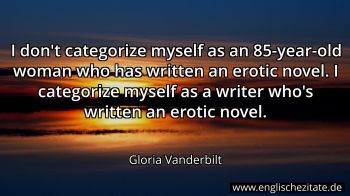
I don't categorize myself as an 85-year-old woman who has written an erotic novel. I categorize myself as a writer who's written an erotic novel.
I no longer feel attracted to the well-made novel. I want to write the story that will zero in and give you intense, but not connected, moments of experience. I guess that's the way I see life. People remake themselves bit by bit and do things they don't understand.
Stories of all lengths and depths come from different parts of the cave. For a novel, you must lay in mental, physical and spiritual provision as for a siege or for a time of hectic explosions, while a short story is, or can be, a steady, timed flame like the lighting of a blow lamp on a building site full of dry tinder.