I tell my students based on my experiences in Hollywood, sure, you can always move to L.A. and try to work with the system, and people do that, but chances are if you want your story in film with characters of color, you will have to make that movie yourself. Find a way to make it yourself. Not just screenwriters, but also producers.
I've gone out of my way to not take baggage with me from film to film.
My experience of children on a film set, especially on a big film set like the 'Potter' one, is not wholly positive.
Film for me became how I related to everything else.
So much of the downstream revenue is linked to that initial excitement, to how much revenue is produced in the domestic box office. For example, what we pay for a film three years later is highly correlated to how well it did in the box office.
I've had plenty of lessons about film acting and theatre acting.
Becoming a producer enables you to empower yourself, to make the film that you want to make. I have desires to make movies - I have movies I'm developing, and things that I'm interested in.
Whether it's theatre or TV or film, you're hoping you're going to bump into a writer that's got a bit of honour in him, that wants to tell a good story and is able to tell it well.
You know, I think the film business is its own worst enemy because it sells movies on DVD footage and 'behind the scenes,' and now it's a real struggle trying to keep storylines and plotlines a secret.
Music is the subliminal connecting adhesive in film, or at least in narrative feature films.
I brought the film like a flower to the world.
Everyone I know who is having success in film right now is there because of persistence.
As a director, you're a bit of a dictator. But I feel that you're a better director if you're open to other people's ideas. It means that it's tougher: you have to be in a choosing process; you have to put the ego aside. As long as everybody's aiming in the same direction... I'm open to my main partners in the film crew.
I think the cinematography in 'Mr. Robot' is some of the best I've ever seen, honestly. Not even as being part of the show but as somebody who enjoys cinema and movies in film and TV.
The silent film has a lot of meanings. The first part of the film is comic. It represents the burlesque feel of those silent films. But I think that the second part of the film is full of tenderness and emotion.
I've actually done three pilots for Disney. I met with the network when I was 16 years old and had just started acting. I would fly to Los Angeles to film pilots, then fly back to Dallas, where I grew up.
The goal is to divide my time between stage and film.
My only real hobby is playing music. I write a lot of music on guitar and keyboards and hope one day to make a record or maybe even write the score for a film.
It's hard being a Broadway actor going into film where you have to tone everything down. In theater, everything you're taught is to be big and broad and make everyone feel like they are right next to you, even in the last row of seats.
On a low-budget film, you don't have all the luxuries.
As an actor, you have many tools - your body, your voice, your emotions, mentally. In film, you have your eyes because they communicate your thought process. In fact, generally in film, what you don't say is more important than what you say. That's not so much the case for stage.
It seemed like a wonderful honor to have the Film Society of Lincoln Center screen 'The Films of Raquel Welch.' It shows a lot of a variety in what they've chosen; it kind of runs the gamut of my film career.
I never said I wanted to be a lead actress; I never said I wanted to be a film actress. This need to trump everyone bewilders me. I'm only 25. I'm not better than anyone. I just want to watch other people and learn to be good.
I would love to do film someday, but I think we are all so happily in tune with 'Glee' that we are sticking with that right now.
I want to do acting as much as I can. When you're on contract with a show, you can't really do other shows. It's hard to do film. I haven't had the opportunity to even audition much for films because I don't have an agent.
When I make a film, I'm not doing it purely for political reasons. If I just wanted to do that, I'd run for office.
The question I ask myself is: have I really just become a squeamish middle-aged man, or has something happened to the horror genre that shows a growing appetite for watching torture, or at least a desire to explore it on film? And if so, why would that be? I can't pretend I know. I just know I don't like it.
I loved 'Junebug.' It was one of my favorite films, my favorite type of film.
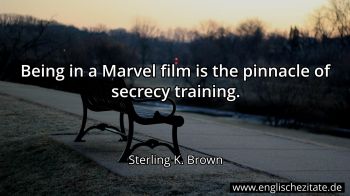
Being in a Marvel film is the pinnacle of secrecy training.
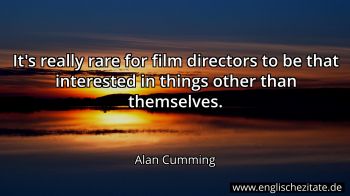
It's really rare for film directors to be that interested in things other than themselves.
Yes, but Hollywood is the strangest place in that they'll torpedo their own film to prove an emotional point.
The stage is suspension of disbelief. Film is a literal medium.
Connection is what one is after in probably most media, but certainly in film, which is an immersive medium.
I love theatre. It's far more satisfying than film. Sometimes there's a collective sigh from the audience, or it's so quiet you can hear a pin drop. I couldn't believe how easy acting was when there's an audience; after a few previews I almost couldn't do it without one.
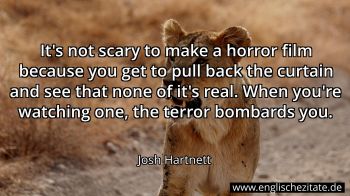
It's not scary to make a horror film because you get to pull back the curtain and see that none of it's real. When you're watching one, the terror bombards you.
There are loads of sociopolitical, racial, class and future-planet situations that really interest me, but I'm not really interested in making a film about them in a film that feels like reality because people view that in a different way. I like using science fiction to talk about subjects through the veneer of science fiction.