Many of the qualities that come so effortlessly to dogs - loyalty, devotion, selflessness, unflagging optimism, unqualified love - can be elusive to humans.
However, further research has shown that it is the normal condition for humans and for most other mammals. It seems pretty clear why this is the case for most mammals and for most human beings.
So when you tell a joke, you want to make someone laugh, or if you tell a story about someone who had a heart attack, it may be because you want the listener to exercise. Stories are tools to create social cohesion and to get humans to strategize together.
We're humans. Why always turn human attitude into political behaviours? I hate that.
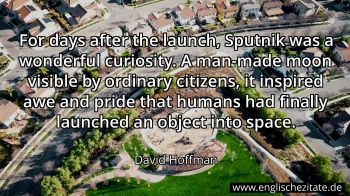
For days after the launch, Sputnik was a wonderful curiosity. A man-made moon visible by ordinary citizens, it inspired awe and pride that humans had finally launched an object into space.
I am interviewing people with a spirit of genuine interest and compassion, and therefore, the general tone of the site is one of genuine interest and compassion. The moment that culture changes, 'Humans of New York' is no longer viable.
I think pink is one of the saddest colors in the world, and many American humans are taught not to take anything pink seriously, which is weird.
I think the 'Terminator' idea is a reasonable one - that is that one day the Internet becomes self-aware and simply says that humans are in the way. After all, if you meet an ant hill and you're making a 10-lane super highway, you just pave over the ants. It's not that you don't like the ants, it's not that you hate ants; they are just in the way.
A lot of my friends growing up were hunters, but I spent all my time on the ice hurting actual humans playing hockey. I never had the chance to run through the woods and shoot at a moose or deer. I was shooting pucks at goaltender's heads.
What happens if you are the last (the very, very last) of your species, and you die - and humans notice? We live, increasingly, at a time when extinctions are recorded, remembered, and the last animal (or plant) in its line, by virtue of its being last, becomes a kind of celebrity. Its finality becomes a thing to honor.
We humans are really good at forming groups to compete, and then dissolving the groups and reforming them along different lines to compete in a different way.
Measles and TB evolved from diseases of our cattle, influenza from a disease of pigs, and smallpox possibly from a disease of camels. The Americas had very few native domesticated animal species from which humans could acquire such diseases.
What people don't appreciate, when they picture Terminator-style automatons striding triumphantly across a mountain of human skulls, is how hard it is to keep your footing on something as unstable as a mountain of human skulls. Most humans probably couldn't manage it, and they've had a lifetime of practice at walking without falling over.
We don't pray for the land. We pray for the humans, all humans... starting with the president, Mohammed Morsi, and all officials, and for God to give everyone wisdom and responsibility to manage the affairs of this country and its people in true Egyptian spirit.
And we should keep our minds open, or at least ajar, to concepts on the fringe of science fiction. Flaky American futurologists aren't always wrong. They remind us that a superintelligent machine is the last instrument that humans may ever design - the machine will itself take over in making further steps.
It's perfectly obvious that there is some genetic factor that distinguishes humans from other animals and that it is language-specific. The theory of that genetic component, whatever it turns out to be, is what is called universal grammar.
The idea that we humans are good-natured, politically correct, nonjudgmental beings is pure fantasy. We are, at the very least, judgmental.
A growing body of evidence suggests that humans do have a rudimentary moral sense from the very start of life.
Robots have gotten steadily more capable, but humans' expectations that robots should have minds keeps biting robot developers.
Scientists who study play, in animals and humans alike, are developing a consensus view that play is something more than a way for restless kids to work off steam; more than a way for chubby kids to burn off calories; more than a frivolous luxury.
When you find your passion, it's great. You go up a mountain with partners, and you have a wonderful opportunity to connect and achieve a goal together. You are not trying to be better than other humans. You are supporting each other.
You shouldn't say 'animals' to distinguish between humans and non-humans. We are all animals.
Big cities are chaotic. And chaos for humans - who have experience from their ancestors - is the last step before conflict. So, in the park, every kind of visual contradiction has been eliminated.
For a few years, skeins of yarn piled up in baskets around the house. There weren't enough humans in my mother's orbit to wear all the scarves and sweaters and hats she knitted. And then, as suddenly as she started, she lost interest, leaving needles still entwined in half-finished fragments.
Humans are kind of story-propagating creatures. If you think of how we spend our days, think of all the time you spend on entertainment. How much of your entertainment centers around stories? Most pieces of music tell stories. Even hanging out with your friends, you talk, you tell stories to each other. They're all stories. We live in stories.
In my view, the fact that computers caught up to humans and completely dominate humans in chess and some other domains already, that says there's evidence that, yes, in principle, they can be better programmers than humans.
When I meet somebody in the street who knows about 'Humans of New York,' a lot of times they might have a scripted answer, and that scripted answer is the first thing to come out of their mouth.
Humans have a light side and a dark side, and it's up to us to choose which way we're going to live our lives. Even if you start out on the dark side, it doesn't mean you have to continue your journey that way. You always have time to turn it around.
I was a frustrated astronaut all my life. I grew up at a time when space seemed to have no boundaries, and lots of us presumed humans would be living on the moon and landing on Mars.
Visit a typical science classroom and you will discover far more than empirical facts being taught. The dominant worldview among scientific intellectuals is evolutionary naturalism, which holds that humans are essentially biochemical machines.
For the life of me, I still don't understand why humans pray.
I think that animals aren't less intelligent than humans, they're just of a different intelligence. We have five million smell-sensitive cells in our nose, they have two hundred and fifty million - they can smell emotion. They can smell different types of emotion, they just have another type of intelligence.
I'm not even really attempting to brand myself outside of 'Humans of New York.' I think part of the reason for my success is that I've put my ego aside and said I'm not going to put all of my effort into trying to promote myself. I'm going to try to promote my work and am going to try to promote my project.
Being in London has really taught me how important history is. Just having information of the past. It helps you predict the future, which is all we really have as, you know, humans.
The natural inclination in all humans is to posit a force, a spirit, outside of us. That tendency toward superstitious magical thinking is just built into our nature.
Humans are still much better than computers at recognizing speech.