I write a lot about my experiences and the people I meet. I've got a lot of material. But a book about me? It seems sort of odd.
I loved to read, but I always thought that the dream was too far away. The person who had written the book was a god, it wasn't a person.
I try to create a challenge for myself in each book. And sometimes, believe me, I just kick myself afterwards, and say, 'Why on earth did you ever attempt this, you idiot!' But I'm always better for the experience.
I've been bragging for over 25 years that my first New York Times bestseller was a book I copied from the U.S. Government Printing Office!
Hands down, the biggest thrill is to get a letter from a kid saying, I loved your book. Will you write me another one?
When I'm writing, I am lost in my book. Except family and close friends, I don't care about what critics, publishers or readers might think.
Some of the most famous books are the least worth reading. Their fame was due to their having done something that needed to be doing in their day. The work is done and the virtue of the book has expired.
I'd like to meet fewer people who say 'Oh, I want to write a book, here are 10 pages I've written,' and more 'Oh, I want to write a book, here are 300 pages I've written.'
I was given a dictionary when I was seven, and I read it because I had nothing else to read. I read it the way you read a book.
And so, I mean, he declared war right there and then in so many words and Alex says later in the book, nobody in the White House from that point on had any doubt that we were going to bomb the mainland of Asia.
There's this trouble with books for me because I'm terrible at thinking of titles. The truth is, even with the titles that I've landed on in the end, they always feel wrong. I think it's because of this whole problem of having to package your book in a certain way.
Giggs is the realest.
I get an urge, like a pregnant elephant, to go away and give birth to a book.
I'm very aware how many distractions the reader has in life today, how many good reasons there are to put the book down.
Now that I've had a book published, it is quite validating, but a bit embarrassing.
'Celebrate' is meant to be a guide to party planning and, as such, it has to cover the basics. If I were to write a cookery book, for instance, I would be compelled to say that, to make an omelette, you have to break at least one egg. Actually, that's not a bad idea. Or maybe I should write a sequel and call it 'Bottoms Up?'
Everyone wants to write a book. Very few people are able to do it.
One of the things you will notice about the book of Mark is that if you read through it in one setting, you will be breathing hard at the end. Literally, Mark has set up this book in a way that it is almost like several snapshots of Jesus Christ.
If somebody wants to book Alec Baldwin on one of our shows, and he wants to come on and talk to our people and say what he wants, I don't care. We would question him on his choice of words.
I have a private press. I'm a book artist. I publish books of other authors and artists. I do the illustrating. I set the type. I print it myself on my press. I do everything but bind it.
The Little Friend is a long book. It's also completely different from my first novel: different landscape, different characters, different use of language and diction, different approach to story.
You go into the book store, there's the cut-out of Dr. Phil, and then the dreaded women's health section where every book, instead of the menopause book with the fanged Medusa head on the cover that might be more pertinent, you always see a flower and a poppy and a daisy and a stethoscope.
I worked with many directors in my life, but Tim Miller is definitely my favorite. He not only has a beautiful sense of directing actors, but he also shares a great love and passion for the comic book world, as I do.
A book is a fragile creature, it suffers the wear of time, it fears rodents, the elements and clumsy hands. so the librarian protects the books not only against mankind but also against nature and devotes his life to this war with the forces of oblivion.
In Peter Ackroyd's book 'London: The Biography,' he describes the route of the medieval wall that enclosed the original city. Take the book and follow it from the Tower of London via the Barbican to Ludgate Hill. You experience the real history of London.
I look at my first appointment book from 1965 and I get dizzy. I was constantly in a phone booth calling photographers.
When I am fishing, I think quite a lot about the fish, but I also think about the book I'm writing.
My understanding is that a book becomes a best seller only when it is pirated, sold on footpaths and at traffic lights.
I always work from an outline, so I know all the of the broad events and some of the finer details before I begin writing the book.
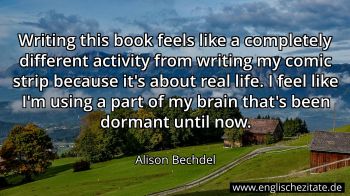
Writing this book feels like a completely different activity from writing my comic strip because it's about real life. I feel like I'm using a part of my brain that's been dormant until now.
All that I am I owe to Jesus Christ, revealed to me in His divine Book.
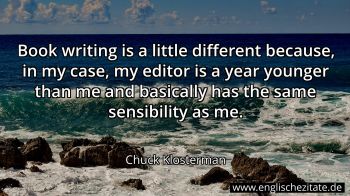
Book writing is a little different because, in my case, my editor is a year younger than me and basically has the same sensibility as me.
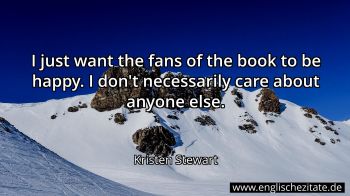
I just want the fans of the book to be happy. I don't necessarily care about anyone else.
It was the biggest suppression of voting rights in our country's history since Jim Crow. And the thread of race runs from the beginning to the end of my book.
Science is constantly proved all the time. If we take something like any fiction, any holy book, and destroyed it, in a thousand years' time, that wouldn't come back just as it was. Whereas if we took every science book and every fact and destroyed them all, in a thousand years they'd all be back because all the same tests would be the same result.
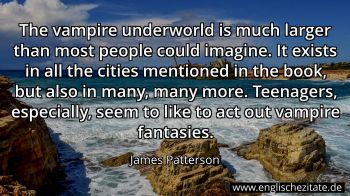
The vampire underworld is much larger than most people could imagine. It exists in all the cities mentioned in the book, but also in many, many more. Teenagers, especially, seem to like to act out vampire fantasies.